@Matt
Conducted: 2025-12-17
Utilizing a vape cartridge at 3.5v, roughly 4-6 five second hits, I was able to finally see the phenomenon post-breakthrough after many prior attempts. I didn't do anything unique or special during this attempt, so I'm not sure why I was unable to see it before. I practiced with stereograms earlier in the day, but I was not able to properly see those, so it's unclear whether or not that actually played a role in my ability to perceive the phenomenon.
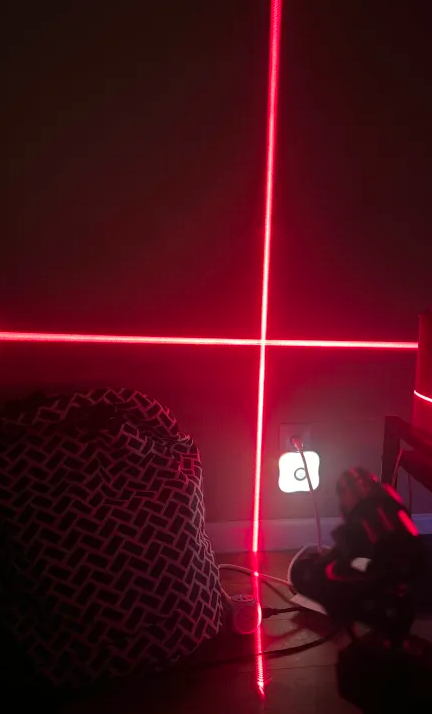
Leaned up against the wall, I saw three dimensional depth within the laser, as well as some bizarre LSD-like warping which is atypical for DMT. After focusing on these distortions for a few seconds, I was able to perceive rotating gears and tiny rune-like Japanese style characters in an extremely small font. This was all still perceivable for at least 10 minutes post-breakthrough. I could "feel" the code in a very difficult-to-explain way, it felt like it was somehow connected to me as well as everything in my environment.
Summary
This experiment reports the observation of complex visual phenomena under the influence of DMT, using a 650nm red laser with a positioning crosshair module. The participant achieved breakthrough visualizations at a certain dosage after multiple attempts, perceiving 3D depth, gears, and rune-like characters, which persisted for 10 minutes post-breakthrough.
Key Findings
- •Successful visualization of COR phenomenon post-breakthrough after multiple attempts
- •Observations included 3D depth, LSD-like warping, and rotating gears with small characters
- •Effective dosage involved 4-6 five second hits using a 3.5v vape cartridge
- •The phenomenon persisted at least 10 minutes post-DMT breakthrough
- •Laser projection resulted in minimal geometric patterns in the image analysis
Patterns Identified
Visual Patterns
- • 3D depth perception
- • Gears and rune-like characters
- • LSD-like warping motion
Behavioral Patterns
- • Perception persisted for 10 minutes post-breakthrough
- • Connection felt between participant and visual codes
Technical Patterns
- • 650nm laser cross forms grid-like lines
- • Stable setup with minimal variations in projection
Scientific Insights
Scientific Significance
The experiment highlights the complex interplay between set/setting and psychoactive substances in visual perception research. The persistence of visual phenomena post-breakthrough and the subjective feeling of connection suggest unique alterations in consciousness and perception pathways.
Methodological Notes
The participant noted practice with stereograms but did not clarify its influence on the experiment's outcome. Though the laser setup appears stable, further variation in technical parameters and surface materials should be explored to enhance pattern visibility.
Recommendations
Future studies should systematically vary dosage levels and participant pre-conditioning (such as stereogram practice) to discern their effects. Investigations could also adjust laser projection variables to assess changes in visual pattern complexity.
Image Analysis
Visual Elements Detected
Image Descriptions
Image 1
Based on the image provided, here is a detailed analysis of the observed characteristics from the Code of Reality (COR) laser experiment: 1. **Code-like Patterns**: - The image shows a clear intersection of two laser beams forming a cross. There appears to be no visible text-like or symbolic coding, but rather straight, geometric lines created by the lasers. 2. **Visual Characteristics**: - The predominant color is red, consistent with the wavelength of 650 nm for red lasers. The light is bright, creating a stark contrast against the darker background. - There is visible light diffusion along the laser paths, giving slightly blurred edges to the lines. 3. **Structure and Organization**: - The intersecting lines suggest grid-like formation but with only one axis shown, forming a classic cross shape. - The image does not display layering or any manifest dimensional shifts beyond the surface intersection. 4. **Movement Indicators**: - The image is static with no evident cues indicating motion or flow within the light beams or background. 5. **Surface Interactions**: - The laser interacts with the wall surface, where the cross is sharply defined, indicating a smooth and even surface for light reflection. - Some diffraction occurs, likely due to texture or minor imperfections on the wall, suggested by soft edges. 6. **Overall Composition**: - The spatial arrangement includes a vertical and horizontal laser beam intersecting near a power outlet. The composition is primarily minimal. - The light fixture and cord at the bottom add context to the environment but do not interfere with the laser projection. Notable features include the sharpness and precision of the intersecting beams, suggesting a controlled and stable experimental setup. The lack of complex patterns or text in the laser projection may indicate the need for further experimental variables to capture the "Code of Reality" phenomenon as described.
This analysis is generated by AI and should be considered as supplementary insight. It does not replace professional scientific review or peer evaluation.
Images (1)
N,N-DMT
| Parameter | Protocol | Trial | Variance |
|---|---|---|---|
| Laser Wavelength | 650 nm | 650 nm | +0 nm (+0.0%) |
| Laser Power | 1 mW | 1 mW | +0.00 mW (+0.0%) |
| Substance Dose | 1000 mg | 75 mg | -925.00 mg (-92.5%) |
| Projection Distance | 1.5 feet | 5 feet | +3.5 feet (+233.3%) |
| Laser Class | Class 2 | Not specified | - |
| Substances | N,N-DMT 1000 mg | N,N-DMT 75 mg | - |
Additional Observers:
No
Except where otherwise noted, all content is licensed under a Creative Commons Attribution-ShareAlike 4.0 International License.